What is nitriding used for?
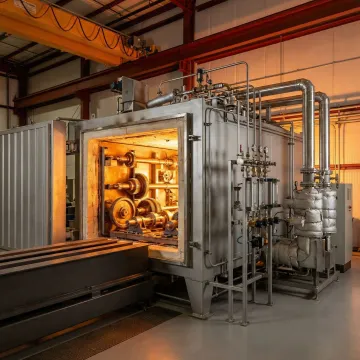
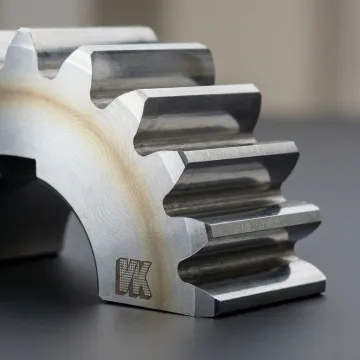
Gas nitriding is used to harden the surface of ferrous metal components — such as gears, shafts, dies, and valve parts — without significantly altering their dimensions. The process diffuses nitrogen into the metal, forming a hard, wear-resistant surface layer. It is widely applied in aerospace, automotive, oil and gas, and heavy manufacturing industries where components must endure high friction, cyclic stress, or corrosive environments.
What is the difference between laser hardening and nitriding?
Laser hardening uses a focused laser beam to rapidly heat and quench the metal surface, producing a hardened martensitic layer through fast thermal cycling — ideal for selective hardening of precise zones. Gas nitriding, by contrast, uses a nitrogen-rich atmosphere at controlled temperatures to chemically diffuse nitrogen into the metal surface over several hours, producing a compound layer with excellent wear resistance, minimal distortion, and no need for quenching.
What metals are suitable for gas nitriding?
Gas nitriding is most effective on alloy steels containing nitride-forming elements such as chromium, molybdenum, vanadium, and aluminum — including tool steels, stainless steels, and nitriding steels like 4140 and 4340. Cast irons and certain titanium alloys can also be nitrided. Pure carbon steels are generally less responsive to the process due to the absence of strong nitride-forming elements.
How does gas nitriding differ from IonPlasma nitriding?
Gas nitriding uses ammonia gas in a furnace to deliver nitrogen to the component surface through thermal diffusion. IonPlasma nitriding (DHIN) uses an electrical plasma field in a vacuum chamber to ionize nitrogen and drive it into the surface more precisely, offering better control over the compound layer and white layer thickness, lower treatment temperatures, and the ability to selectively treat specific surfaces using masking techniques.
Will gas nitriding change the dimensions of my components?
Gas nitriding produces minimal dimensional change compared to other hardening processes, as it is conducted at relatively low temperatures (typically 480–580°C) and does not involve quenching. A very thin compound layer forms at the surface, which may add a few microns. For precision components, post-nitriding light finishing operations can be specified. VaporKote accounts for these considerations during pre-treatment consultation and process planning.
What industries does VaporKote serve with its nitriding services?
VaporKote provides gas nitriding and surface hardening services to a broad range of industries, including oil production, petrochemical refining, aerospace, mining, agriculture, pulp and paper, heat exchanger manufacturing, and general manufacturing. Our treatments are designed for components operating in high-wear, high-temperature, or chemically aggressive environments where standard materials would fail prematurely.
How long does the gas nitriding process take?
Cycle times for gas nitriding typically range from 10 to 80 hours depending on the desired case depth, alloy composition, and component geometry. Shallower case depths used for fatigue resistance may be achieved in shorter cycles, while deep diffusion zones for heavy wear applications require longer exposure. VaporKote works with clients to select the optimal cycle parameters for their specific performance requirements and delivery schedules.
Does VaporKote provide certification and documentation for nitrided components?
Yes. VaporKote adheres to ASTM, ASME, SAE, API, and other engineering codes and practices, and provides metallurgical analysis and certification of diffusion coatings. Documentation can include hardness measurements, case depth verification, and process records — supporting quality audits and compliance requirements for regulated industries such as aerospace, petrochemical, and oil and gas.