What are tools coated with?
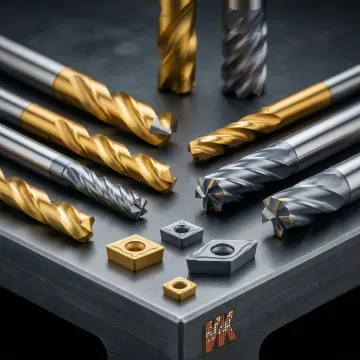
Industrial cutting tools are most commonly coated with physical vapor deposition (PVD) films such as titanium nitride (TiN), chromium nitride (CrN), aluminum nitride (AlN), and zirconium nitride (ZrN). Ferrous tools may also receive boron diffusion coatings or thermal diffusion coatings that form a hardened metallurgical layer directly in the base metal surface for maximum adhesion and durability.
What are the different types of tool coating?
The main categories are PVD coatings (TiN, CrN, AlN, ZrN), CVD coatings, thermal diffusion (TD) coatings, boronizing (boriding), IonPlasma nitriding, and aluminizing. Each type differs in hardness, temperature resistance, friction coefficient, and compatibility with ferrous or non-ferrous substrates. Selecting the right type depends on tool material, cutting speed, workpiece material, and operating environment.
What is the best tool coating for cutting aluminum?
For cutting aluminum and other non-ferrous alloys, zirconium nitride (ZrN) and chromium nitride (CrN) PVD coatings are widely preferred because they have low affinity for aluminum, reducing built-up edge and material adhesion. AlTiN and DLC coatings also perform well. VaporKote's engineers assess your specific alloy, cutting parameters, and speeds to recommend the most effective non-ferrous coating.
How does boronizing compare to standard heat treatment for tool hardness?
Boronizing creates a surface hardness of 1500 Knoop (RC75+ equivalency), which is significantly harder than what conventional heat treatment or even tungsten carbide achieves. Standard heat treatment modifies bulk mechanical properties but does not create the ultra-hard diffusion layer that boronizing delivers at the tool surface, making boronizing far superior for wear and erosion resistance.
Are PVD coatings suitable for both ferrous and non-ferrous materials?
Yes. PVD coatings like CrN, TiN, AlN, and ZrN can be applied to a wide range of substrates including high-speed steel, carbide, stainless steel (ferrous), as well as titanium and aluminum alloy tooling (non-ferrous). VaporKote selects the specific PVD chemistry based on the substrate and intended application to ensure optimal adhesion, hardness, and performance.
How long does the tool coating process take, and will it affect my tool dimensions?
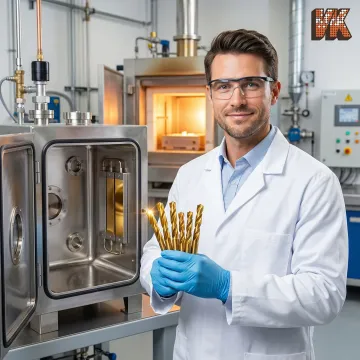
PVD and diffusion coating cycle times typically range from one to several days depending on coating type and batch size. Coating thicknesses are precisely controlled—generally in the range of 1–5 microns for PVD coatings—which has negligible impact on tight-tolerance tool dimensions. VaporKote performs dimensional inspection before and after coating to confirm tolerances are maintained.
Which industries does VaporKote serve with tool coating services?
VaporKote provides tool and component coatings to clients in aerospace, oil production and refining, petrochemical processing, mining, agriculture, pulp and paper, heat exchanger manufacturing, and general manufacturing. Our coatings address the specific wear, corrosion, and temperature challenges common to each of these industries, and all work is certified to applicable ASTM, ASME, SAE, and API standards.
Does VaporKote provide coating recommendations and engineering support?
Absolutely. VaporKote's engineering consulting team works directly with clients to analyze component requirements, conduct feasibility assessments, and recommend the most cost-effective coating strategy. We formulate custom on-site powder mixes and provide full metallurgical analysis and certification reports, ensuring every coating decision is backed by data and aligned with your performance and budget objectives.