What is the micro machining process?
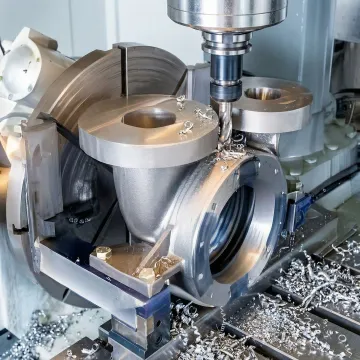
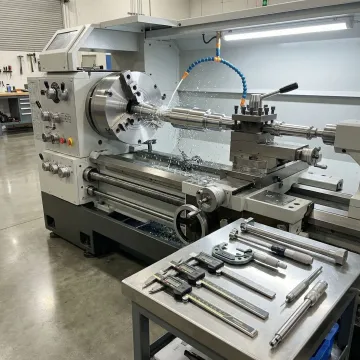
Micro machining is a precision manufacturing process that produces extremely small or intricately detailed components using CNC equipment with fine cutting tools. It relies on tight tolerances—often in the micron range—combined with careful material selection and controlled machining parameters to achieve accurate geometries, fine surface finishes, and consistent repeatability for miniaturized or high-precision industrial and aerospace parts.
What are the benefits of Microprecision?
Microprecision machining delivers tighter dimensional accuracy, better surface finish, and improved component fit compared to standard machining. Benefits include reduced assembly errors, lower friction in moving parts, longer component service life, and the ability to meet strict engineering tolerances required by aerospace, medical, and petrochemical industries. Combined with protective coatings like boronizing, microprecision parts can achieve even greater durability and wear resistance.
What are micro-precision components?
Micro-precision components are parts manufactured to extremely tight dimensional tolerances, typically used in applications where standard machining accuracy is insufficient. Examples include pump wear rings, valve seats, bushings, sleeves, and aerospace fittings. These components must maintain exact clearances under operating loads to ensure system efficiency, minimize leakage, prevent premature wear, and sustain peak performance across demanding industrial environments.
What is a precision component?
A precision component is a machined or manufactured part produced to tight dimensional specifications, often defined by engineering drawings with close tolerances measured in thousandths of an inch or micrometers. Precision components are critical in industries like oil and gas, aerospace, and petrochemical processing, where dimensional accuracy directly affects equipment reliability, safety, and operational efficiency. VaporKote manufactures precision components and integrates protective coatings in-house to maximize performance.
What tolerances can VaporKote hold in precision machining?
VaporKote's close-tolerance machining capabilities are designed to meet the stringent dimensional requirements of specialized industrial equipment. Our machining processes adhere to ASTM, ASME, SAE, and API engineering codes. For specific tolerance requirements on your components—whether it's a pump wear ring, bushing, or custom industrial part—we recommend submitting your engineering drawings for a detailed technical review and quotation.
What is the maximum part size VaporKote can machine?
VaporKote's facility in Anaheim, CA is equipped to machine large components up to 68 inches in diameter. This makes us one of the few providers capable of handling large industrial parts—such as heat exchanger components, pump housings, and heavy equipment parts—while maintaining close tolerances and offering integrated coating services in the same facility.
Can VaporKote machine and coat parts in the same facility?
Yes. VaporKote offers a significant advantage by performing precision CNC machining alongside in-house boronizing, aluminizing, PVD coatings, IonPlasma nitriding, and heat treatment under one roof. This integrated approach ensures that final dimensions account for coating thickness, reduces handling and shipping between vendors, shortens lead times, and results in a fully finished, performance-certified component delivered from a single source.
What industries does VaporKote serve with its machining services?
VaporKote serves a broad range of industrial sectors with its precision machining capabilities, including oil production and drilling, petrochemical refining, aerospace, mining, agriculture, pulp and paper, and heat exchanger manufacturing. Our components and coatings are engineered to withstand the specific wear, erosion, corrosion, and temperature challenges common to each of these industries.