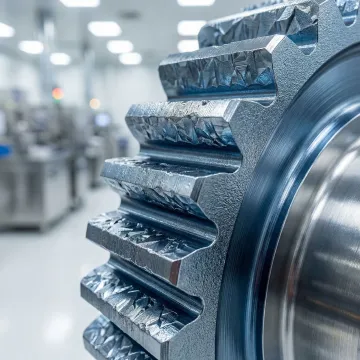
What are advanced coatings?
Advanced coatings are engineered surface treatments—such as boronizing, aluminizing, PVD, and thermal diffusion—applied to metal components to dramatically improve their resistance to wear, corrosion, heat, and erosion. Unlike standard paints or platings, these coatings often form a metallurgical bond with the base metal, resulting in longer component life, reduced maintenance costs, and superior performance under extreme industrial conditions.
What are the 4 types of coatings?
The four primary categories of industrial protective coatings are: (1) Diffusion coatings, such as boronizing and aluminizing, which infuse elements into the metal surface; (2) Physical Vapor Deposition (PVD) coatings, which deposit thin hard films like TiN or CrN; (3) Thermal spray coatings, which apply molten materials to the surface; and (4) Chemical conversion coatings, which chemically alter the surface layer for corrosion protection.
How does boronizing compare to other surface hardening treatments?
Boronizing achieves an RC75+ equivalency surface hardness (1500 Knoop), making it significantly harder than tungsten carbide cutting tools and far superior to nitriding, carburizing, or chrome plating. This ultra-hard diffusion layer provides exceptional erosion, abrasion, and corrosion resistance, and VaporKoted components consistently outlast alternative treatments—often saving clients hundreds of thousands of dollars annually in replacements and downtime.
What industries benefit most from advanced coating services?
Advanced coatings are critical in industries where components face extreme wear, high temperatures, or corrosive environments. VaporKote serves oil production, petrochemical refining, aerospace, mining, agriculture, pulp and paper, and heat exchanger manufacturing. Any sector that relies on pumps, valves, fasteners, tubing, or rotating equipment stands to gain significant cost savings and performance improvements from professional diffusion or PVD coating services.
How long does a typical coating process take?
Turnaround time depends on the coating type, component size, and batch volume. Diffusion processes like boronizing and aluminizing typically require high-temperature furnace cycles ranging from several hours to over a day, plus preparation and inspection time. VaporKote prioritizes efficient scheduling and rapid turnaround to minimize client downtime. Contact our team with your specific components and requirements for an accurate project timeline.
Can VaporKote coat large or custom-sized components?
Yes. VaporKote's Anaheim facility is equipped with state-of-the-art furnaces capable of processing components up to 68 inches in diameter. Our close-tolerance machining capabilities also allow us to manufacture and coat custom parts to precise dimensional specifications. Whether you need large heat exchanger tubing, oversized pump impellers, or custom-manufactured wear rings, VaporKote has the capacity and expertise to deliver.
Does VaporKote meet industry compliance and engineering standards?
Absolutely. VaporKote adheres to ASTM, ASME, SAE, API, and other recognized engineering codes and practices across all coating and manufacturing processes. We also perform metallurgical analysis and provide certification of diffusion coatings, ensuring every component we treat meets or exceeds the stringent requirements of your industry or project specification.
How do I know which coating is right for my application?
Selecting the optimal coating depends on your component's operating environment, base material, and the specific failure mode you need to address—whether that's erosion, high-temperature oxidation, galling, or general corrosion. VaporKote's engineering consulting team works closely with clients to evaluate component requirements and recommend the most effective and cost-efficient coating solution. We encourage you to reach out for a no-obligation consultation.