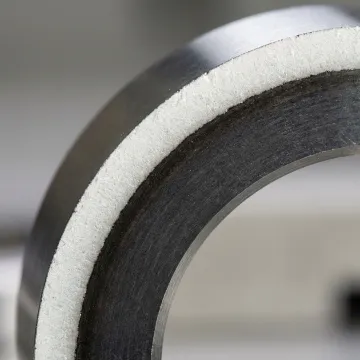
What are wear-resistant coatings?
Wear-resistant coatings are protective surface treatments applied to metal components to reduce degradation caused by friction, abrasion, erosion, and corrosion. Processes like boronizing, PVD coatings, and thermal diffusion coatings form hardened layers—or intermetallic compounds—on component surfaces, significantly extending service life and reducing the frequency and cost of replacements and maintenance shutdowns.
What are examples of wear-resistant products?
Common examples include boronized pump impellers, wear rings, and valve components; PVD-coated cutting tools and industrial parts using CRN, TIN, or ZRN; aluminized heat exchanger tubing and fasteners; and IonPlasma nitrided gears and shafts. VaporKote also manufactures boron-hardened wear rings, sleeves, and bushings purpose-built for demanding erosion and abrasion environments.
Which industries benefit most from wear resistant coatings?
Wear resistant coatings are critical in oil production, petrochemical refining, aerospace, mining, pulp and paper, heat exchanger manufacturing, and agriculture. Any industry operating pumps, valves, rotating equipment, or high-temperature components under abrasive or corrosive conditions can significantly reduce maintenance costs and extend equipment life with VaporKote's coating solutions.
How hard is a boronized surface compared to other coatings?
VaporKote's boronizing process achieves RC75+ equivalency, corresponding to 1500 Knoop hardness. This is harder than tungsten carbide cutting tools and substantially harder than most competing surface treatments and untreated base materials. This extreme hardness makes boronized components exceptionally resistant to erosion, abrasion, and surface wear in the most demanding industrial environments.
What is the difference between boronizing and aluminizing?
Boronizing infuses boron into metal surfaces to create an ultra-hard layer (RC75+) that resists mechanical wear, erosion, and abrasion—ideal for pumps, valves, and rotating components. Aluminizing bonds aluminum into the surface to provide superior high-temperature corrosion and oxidation resistance, making it ideal for heat exchanger tubing, fasteners, and reactor screens operating in thermally aggressive environments.
How long does a wear resistant coating last?
The lifespan of a coating depends on the process used, the base material, and operating conditions. VaporKote's diffusion coatings—such as boronizing and aluminizing—become part of the metal itself, not just a surface film, meaning they cannot peel or flake. Clients regularly report that VaporKoted components vastly outlast untreated alternatives and competing treatments, saving hundreds of thousands of dollars annually in maintenance costs.
Can VaporKote coat large or custom components?
Yes. VaporKote's state-of-the-art furnaces are capable of aluminizing and boronizing components up to 68 inches in diameter. The company also offers close tolerance machining capabilities and can manufacture custom components—including wear rings, sleeves, and bushings—to client specifications before applying protective coatings, delivering a complete solution from fabrication to finished, hardened parts.
Does VaporKote adhere to industry engineering standards?
Absolutely. VaporKote's coating processes and engineering practices adhere to ASTM, ASME, SAE, API, and other recognized engineering codes. The company also provides metallurgical analysis and certification of diffusion coatings, giving clients documented assurance that components meet or exceed the performance and quality standards required for critical industrial applications.