Introduction
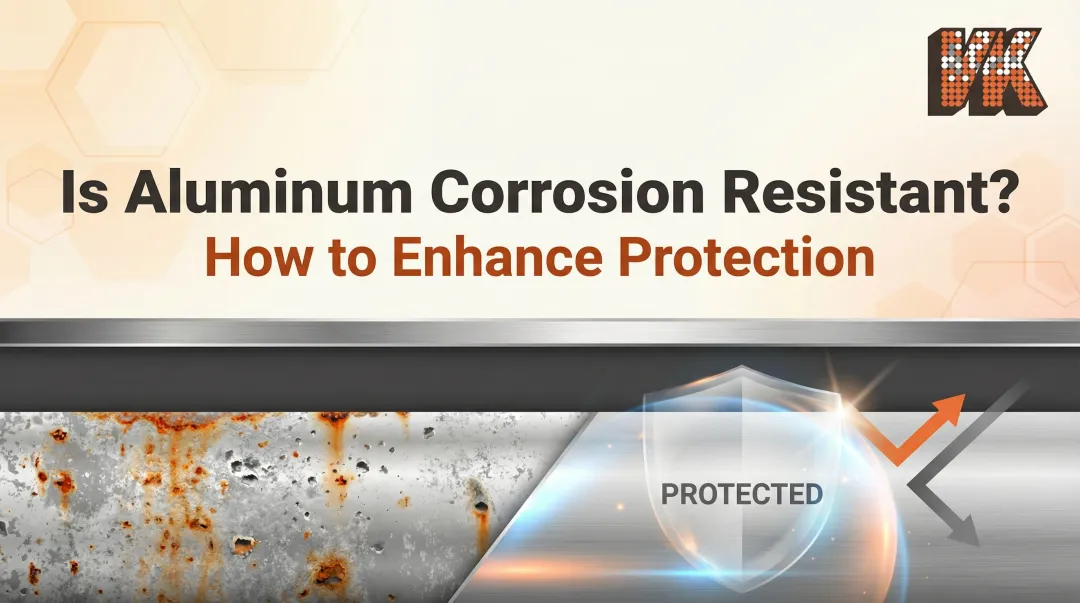
Aluminum is a go-to material across aerospace, petrochemical, oil & gas, and manufacturing—prized for its strength-to-weight ratio and built-in corrosion resistance. That resistance, however, has real limits. Expose aluminum to chlorides, pH extremes, dissimilar metals, or trapped moisture, and the protective oxide layer breaks down fast.
For industries where a single component failure triggers costly downtime or a safety incident, understanding the causes and choosing the right prevention strategy isn't optional—it's operational.
Global corrosion costs reach $2,505 billion annually (3.4% of global GDP), with the U.S. Department of Defense alone spending over $23 billion per year on corrosion-related issues. The right prevention approach cuts those costs directly, extending component life and keeping equipment running.
Key Takeaways
- Aluminum's natural oxide layer provides baseline protection but breaks down under chlorides, galvanic contact, pH extremes, and trapped moisture
- Common corrosion types: pitting, galvanic, crevice, and chemical/pH-induced
- Prevention relies on protective coatings, anodizing, corrosion inhibitors, and cathodic protection
- Watch for white powdery deposits, visible pitting, and discoloration at metal contact points
- Long-term control means scheduled inspections, sound design practices, and documented maintenance protocols
Common Causes of Aluminum Corrosion
Aluminum spontaneously forms a thin aluminum oxide (Al₂O₃) passivation layer that provides built-in protection. However, this layer is not impervious. Research confirms that aluminum's oxide film is stable only within a pH range of 4.0 to 9.0. Outside this range, or when exposed to specific chloride concentrations, the oxide layer rapidly deteriorates. Most aluminum corrosion begins the moment this layer is compromised by environmental, chemical, or electrochemical forces.
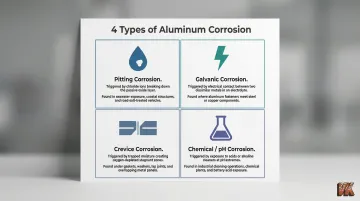
Pitting Corrosion
Pitting is the most common form of aluminum corrosion. Chloride ions from seawater, road salt, or industrial process fluids breach the oxide layer and create localized, deep pits that weaken the metal structurally—even when surrounding surfaces appear intact.
Critical chloride thresholds vary by alloy. For AlSi9Cu3 alloys at pH 7, metastable pitting initiates at ~20 mg/dm³ chloride concentration, while stable pitting occurs around 450–500 mg/dm³.
Typical environments where pitting occurs:
- Coastal and marine settings
- Chemical processing facilities
- Food production lines
- Oil & gas operations with salt-laden or chloride-rich fluids
Galvanic Corrosion
When aluminum contacts a dissimilar metal—such as steel, copper, or brass—in the presence of an electrolyte, an electrochemical cell forms. According to ASTM G82, aluminum acts as a highly active anode and corrodes preferentially at an accelerated rate.
The severity increases dramatically with unfavorable anode-to-cathode area ratios. A small aluminum fastener coupled to a large stainless steel plate will suffer rapid, concentrated destruction.
Common industrial scenarios:
- Aluminum fittings on steel piping
- Mixed-metal heat exchangers
- Aluminum fasteners in stainless steel assemblies
- Offshore equipment where seawater acts as the electrolyte
Crevice Corrosion
Moisture trapped in narrow gaps—joints, flanges, overlapping surfaces, under gaskets—creates a stagnant, oxygen-depleted microenvironment. This autocatalytic process shifts the local pH downward and aggressively attacks the oxide layer from within, with metal ions hydrolyzing to acidify the crevice while chloride ions migrate inward.
Where this most commonly appears:
- Structural joints in marine applications
- Vehicle exteriors
- Industrial enclosures in high-humidity environments
- Components subjected to alternating wet/dry cycles
Chemical and pH-Induced Corrosion
Beyond the stable pH range established above, strong acids and alkaline solutions—including industrial cleaners, concrete, and mortar—rapidly dissolve the oxide layer and attack the base metal directly.
Exposure to organic halogens (such as trichloroethylene used in industrial cleaning) can trigger rapid, severe corrosion reactions. Trichloroethylene reacts at AlOH surface sites to form chlorine ions, which initiate corrosive attack at oxygen vacancy sites. Alloys containing copper or other heavy metals are especially vulnerable in acidic environments.
What Happens When Aluminum Corrosion Is Ignored
Unchecked corrosion progresses from surface pitting into structural degradation, leading to part failure, leaks, or fractures in load-bearing or pressure-containing components. The consequences are severe for critical sectors like oil drilling, aerospace, and industrial infrastructure.
According to a NACE International economic impact study, the global cost of corrosion reaches an estimated $2,505 billion annually — equivalent to 3.4% of global GDP. In the United States alone, direct metallic corrosion costs hit $276 billion per year.
Indirect costs — lost time, outages, delays, failures, and litigation — conservatively match those direct figures, pushing the total U.S. economic impact toward 6% of GDP.
Warning Signs You're About to Experience Serious Corrosion
- White or gray powdery deposits forming on aluminum surfaces signal active breakdown of the oxide layer and early-stage corrosion product buildup
- Surface pitting, etching, or roughening near joints, welds, and fastener contact points where moisture or dissimilar metals concentrate
- Discoloration, water staining, or chalky film at metal interfaces: galvanic or crevice corrosion is likely already progressing beneath what's visible
How to Prevent Aluminum Corrosion
Prevention requires a layered strategy. The right combination of methods depends on the operating environment, exposure type, and application requirements. Four approaches cover the majority of industrial scenarios: protective coatings, anodizing, corrosion inhibitors, and cathodic protection.
Apply High-Performance Protective Coatings
Protective coatings create a physical barrier between aluminum and corrosive agents. Barrier quality and adhesion strength vary significantly between coating types, ranging from paints and epoxies to advanced diffusion coating technologies.
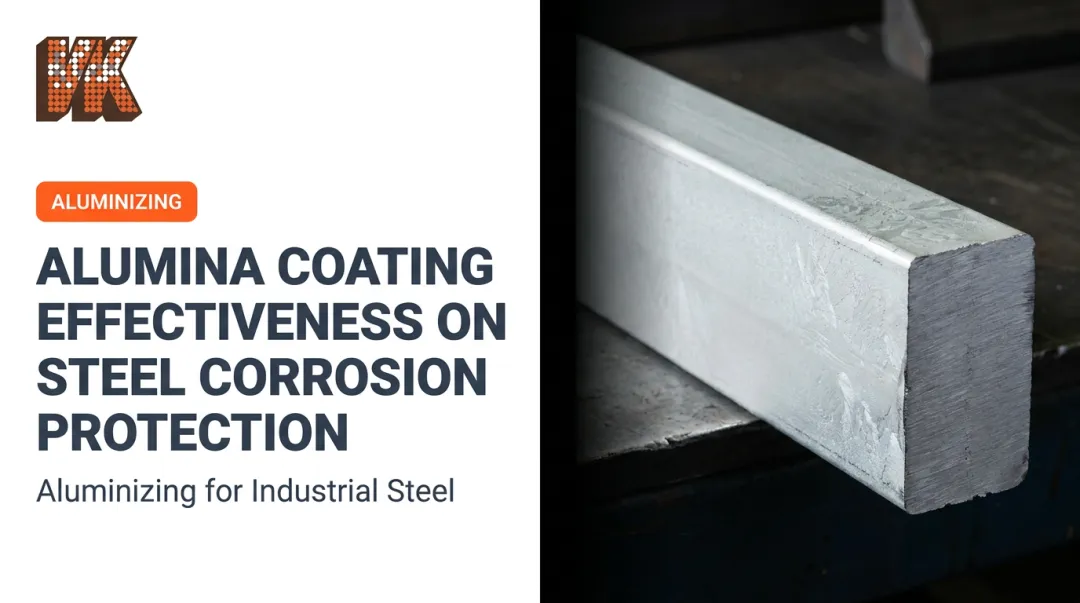
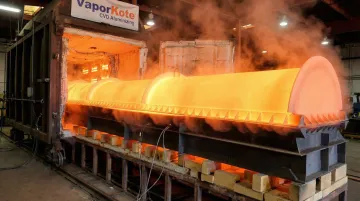
For demanding industrial applications, diffusion coatings offer superior performance. VaporKote's aluminizing process uses chemical vapor deposition (CVD) to bond an intermetallic compound directly into the metal surface. Unlike surface-only coatings that rely on mechanical adhesion, this metallurgical integration creates a protective layer that cannot peel, flake, or separate from the substrate.
VaporKote's diffusion coatings consistently outperform other surface treatments in aggressive environments — petrochemical, oil & gas, and aerospace among them. Large components up to 68 inches in diameter can be processed in-house, and on-site powder mixes are custom-formulated to each application's specifications.
Timing is critical: Apply protective coatings during manufacturing or before deployment into corrosive environments. Retrofitting corroded components costs more and delivers inferior protection compared to upfront treatment.
Anodizing
Anodizing is an electrochemical process that intentionally thickens aluminum's natural oxide layer, producing a denser, harder surface that resists pitting, wear, and environmental attack more effectively than untreated metal.
Key specifications:
| Metric | Type II (Sulfuric Acid) | Type III (Hardcoat) |
|---|---|---|
| Thickness Range | 1.8 to 25 µm | 12 to 114 µm |
| Surface Hardness | 30–45 HRC | 60–70 HRC |
| Corrosion Resistance | 336+ Hours (ASTM B117) | 1000–2000+ Hours |
Hard coat anodizing (Type III) is preferred for high-wear, high-exposure industrial components, while standard anodizing (Type II) suits architectural and lighter-duty applications.
The sealing tradeoff: To achieve maximum corrosion resistance, anodic films are hydrothermally sealed, which closes microscopic pores. However, sealing hydrates and softens the aluminum oxide, reducing absolute hardness and wear resistance by 5–15%. Unsealed Type III provides maximum abrasion resistance but is more susceptible to corrosion.
Use Corrosion Inhibitors
Corrosion inhibitors are chemical compounds applied directly to aluminum surfaces or incorporated into coatings, coolants, or process fluids. They form a molecular film that blocks moisture and oxygen from reaching the metal.
Critical chemistry considerations:
- Molybdates: Absorb onto flawed regions of the aluminum oxide film and stimulate repassivation through oxidation-reduction processes
- Silicates: Act as anodic, filming inhibitors that slowly develop a protective silica gel film over the metal surface
- Avoid nitrites: While effective for steel, sodium nitrite is not effective for aluminum and can actually be antagonistic
Inhibitors are commonly deployed in closed-loop cooling systems, aerospace hydraulic circuits, and industrial heat exchangers. Verify chemical compatibility with the specific aluminum alloy and process fluid before use to avoid adverse reactions.
pH control: When aluminum is present in closed-loop systems, maintain pH strictly below 9.0 — ideally between 7.8 and 8.3.
Implement Cathodic Protection
Cathodic protection works by attaching a sacrificial anode—typically zinc or magnesium—to the aluminum structure. The more reactive metal corrodes preferentially, shielding the aluminum from electrochemical attack.
Anode selection by environment:
- Seawater and marine sediments: Aluminum-Zinc-Indium or Zinc anodes (stable in chloride-rich conditions)
- Freshwater and high-resistivity soil: Magnesium anodes (higher driving voltage)
- Avoid: Magnesium in saltwater where it can over-protect and damage aluminum
Optimal use cases:
- Marine structures
- Buried aluminum piping
- Offshore equipment
- Underground components where continuous electrolyte exposure makes surface coatings alone insufficient
Tips for Long-Term Corrosion Control
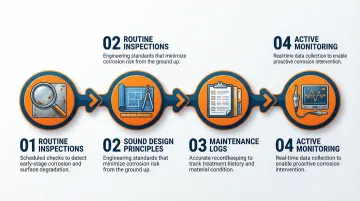
Establish routine inspection intervals — Visually check for pitting, discoloration, or deposit buildup at joints, welds, and moisture-prone areas. Increase frequency in high-risk environments such as marine, chemical processing, or offshore settings.
Apply sound design principles — Avoid dissimilar metal contact by using insulating gaskets or compatible fasteners. Engineer drainage paths to prevent water pooling. Eliminate crevices and sharp angles that trap moisture.
Maintain detailed maintenance logs — Document coating condition, inspection findings, repair actions, and environmental exposure history. This enables early trend detection and timely recoating before corrosion advances.
Monitor actively in demanding environments — Deploy corrosion monitoring sensors or schedule periodic metallurgical analysis to ASTM standards (G1, G31, B117, G34, G67) to quantify corrosion rates and confirm coating performance over time.
For components in petrochemical, offshore, or heavy industrial service, VaporKote conducts metallurgical analysis and certifies diffusion coating performance to ASTM, ASME, SAE, and API standards — providing documented corrosion data that supports both maintenance planning and compliance reporting.
Conclusion
Aluminum corrosion has identifiable causes and a predictable progression. With the right combination of coatings, surface treatments, design choices, and inspection routines applied from the start, it's highly preventable.
Proactive prevention—particularly where components face aggressive chemical or environmental exposure—saves substantially more than reactive repair ever will. Avoided downtime, lower maintenance costs, and extended equipment life compound quickly. In fact, implementing formal Corrosion Management Systems during procurement and design can recover an estimated 15–35% in preventable financial losses.
For components operating in especially harsh conditions, professional-grade surface treatments like aluminizing and thermal diffusion coatings—offered by specialists such as VaporKote—provide a level of protection that standard paint or anodizing cannot match long-term.
Frequently Asked Questions
Does aluminum need corrosion protection?
Aluminum's natural oxide layer provides baseline protection, but chlorides, pH extremes, and dissimilar metal contact can break it down quickly. In industrial service, engineered corrosion protection is necessary for reliable, long-term component performance.
What is the best protective coating for aluminum?
The optimal coating depends on the operating environment. Anodizing suits general and architectural use, while diffusion coatings like VaporKote's aluminizing process and industrial epoxies perform best in chemically aggressive or high-wear industrial environments.
How do you treat corroded aluminum?
Clean mild corrosion mechanically or with aluminum-compatible chemical solutions, then reapply a suitable protective finish. Deep or severe corrosion requires professional evaluation and may require component replacement.
What corrodes aluminum the fastest?
Chloride-rich environments (seawater, road salt) and dissimilar metal contact in the presence of an electrolyte drive the fastest corrosion. Strongly acidic or alkaline solutions accelerate damage by dissolving the protective oxide layer.
Is galvanic corrosion on aluminum preventable?
Yes. Use insulating gaskets between dissimilar metals, select compatible alloy pairings, apply protective coatings to one or both surfaces, and implement cathodic protection where electrolyte exposure cannot be avoided.
What environments are most damaging to aluminum?
Marine and saltwater environments, strongly acidic or alkaline industrial settings, high-humidity conditions with stagnant moisture, and soil burial are the most corrosive—particularly when combined with dissimilar metal contact or abrasive mechanical conditions.