Introduction
Heat exchangers are foundational equipment in virtually every industrial process—from oil refining to HVAC to food processing—directly controlling how efficiently energy moves through an entire operation. A single poorly specified or prematurely failed unit can trigger production bottlenecks, waste thousands of dollars in energy costs, and force unplanned shutdowns that ripple across a facility.
Not all heat exchangers are built the same. Each type is engineered for specific pressure ranges, fluid types, temperature demands, and space constraints. Choosing the wrong design creates real operational consequences: excessive fouling, accelerated corrosion, maintenance nightmares, or outright equipment failure.
This article walks through the most important types of heat exchangers, how each one works, where each performs best, and what to consider when selecting the right design. Whether you're specifying equipment for a new installation or troubleshooting chronic failures in an existing system, these distinctions will sharpen your decision-making.
TL;DR
- A heat exchanger transfers heat between two fluids without mixing them—critical in industries from petrochemical to aerospace
- Four main types exist: shell and tube, plate, double pipe, and finned tube—each suited to different pressure, temperature, and space conditions
- Shell and tube leads in industrial use; plate exchangers maximize efficiency in tight spaces; double pipe is the simplest and lowest-cost option; finned tube dominates air-cooling applications
- Type selection hinges on fluid properties, operating conditions, space constraints, and total lifecycle cost
- Components exposed to corrosive or abrasive environments require surface protection to maintain performance and extend service life
What Is a Heat Exchanger?
A heat exchanger moves thermal energy from one fluid (liquid or gas) to another across a physical barrier—such as tubes or metal plates—without the two fluids ever mixing. This separation is critical in industrial processes where contamination between streams would compromise product quality, safety, or equipment integrity.
Heat exchangers work through conduction (heat transfer through the wall separating the fluids), convection (heat transfer within each fluid stream), and sometimes radiation at high temperatures. Efficiency depends on surface area, flow configuration, and material thermal conductivity.
These devices appear across industries, including:
- Steam generation and power production
- Crude oil refining and petrochemical processing
- Chemical reactor cooling and heat recovery
- HVAC temperature control in commercial buildings
- Food pasteurization and beverage processing
How fluids move through the exchanger also shapes performance. The three main configurations—counterflow, parallel flow, and crossflow—each produce different heat transfer outcomes.
Counterflow arrangements, where hot and cold fluids move in opposite directions, maximize the temperature difference driving heat transfer. This means less surface area is needed for the same duty compared to parallel or crossflow designs.
Types of Heat Exchangers
Heat exchangers are not one-size-fits-all solutions. Type selection depends on the nature of the fluids involved, operating pressure and temperature range, fouling potential, available footprint, and maintenance access. The four types covered here represent classification by construction (physical design), which is the most practical basis for selection decisions in industrial and commercial settings.
Shell and Tube Heat Exchangers
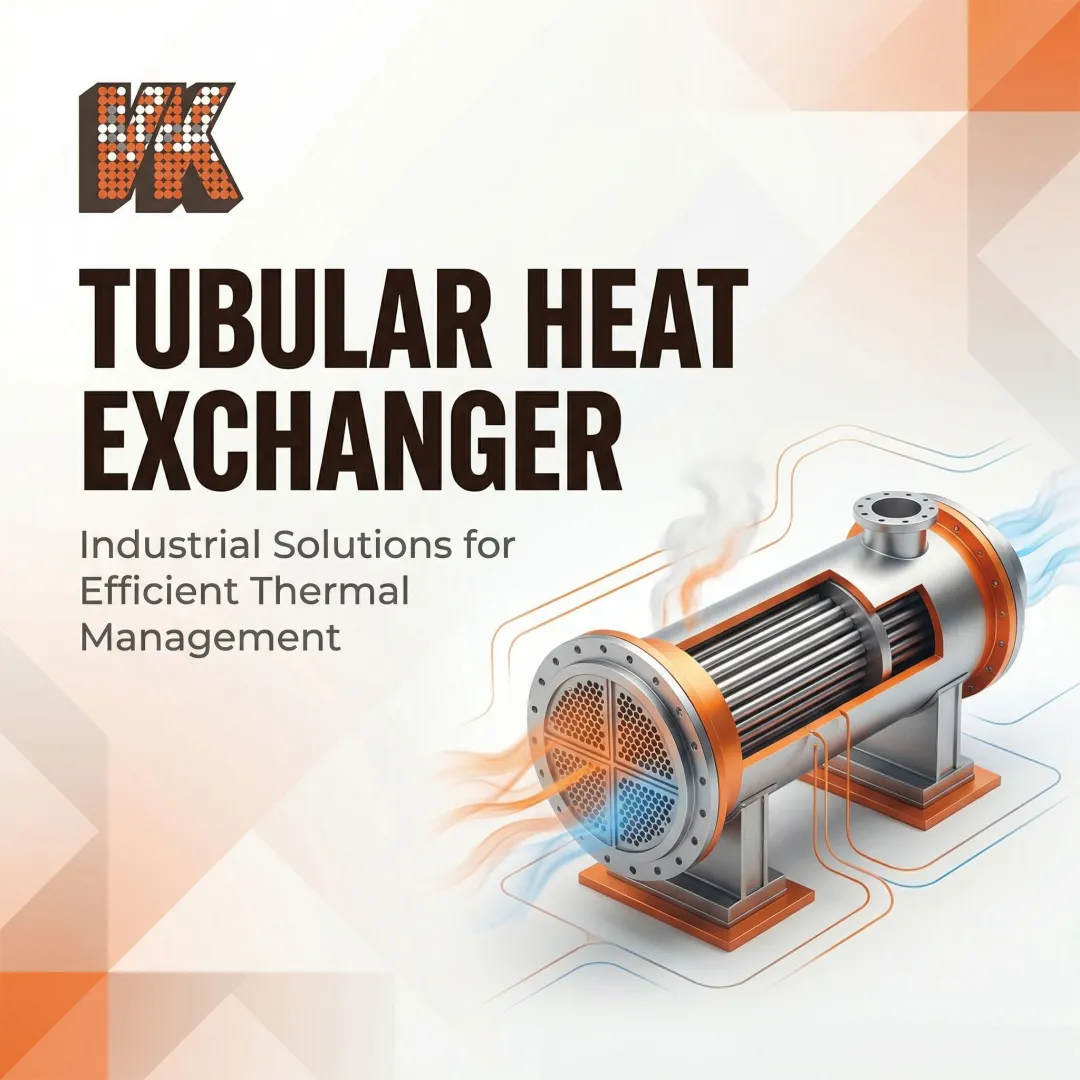
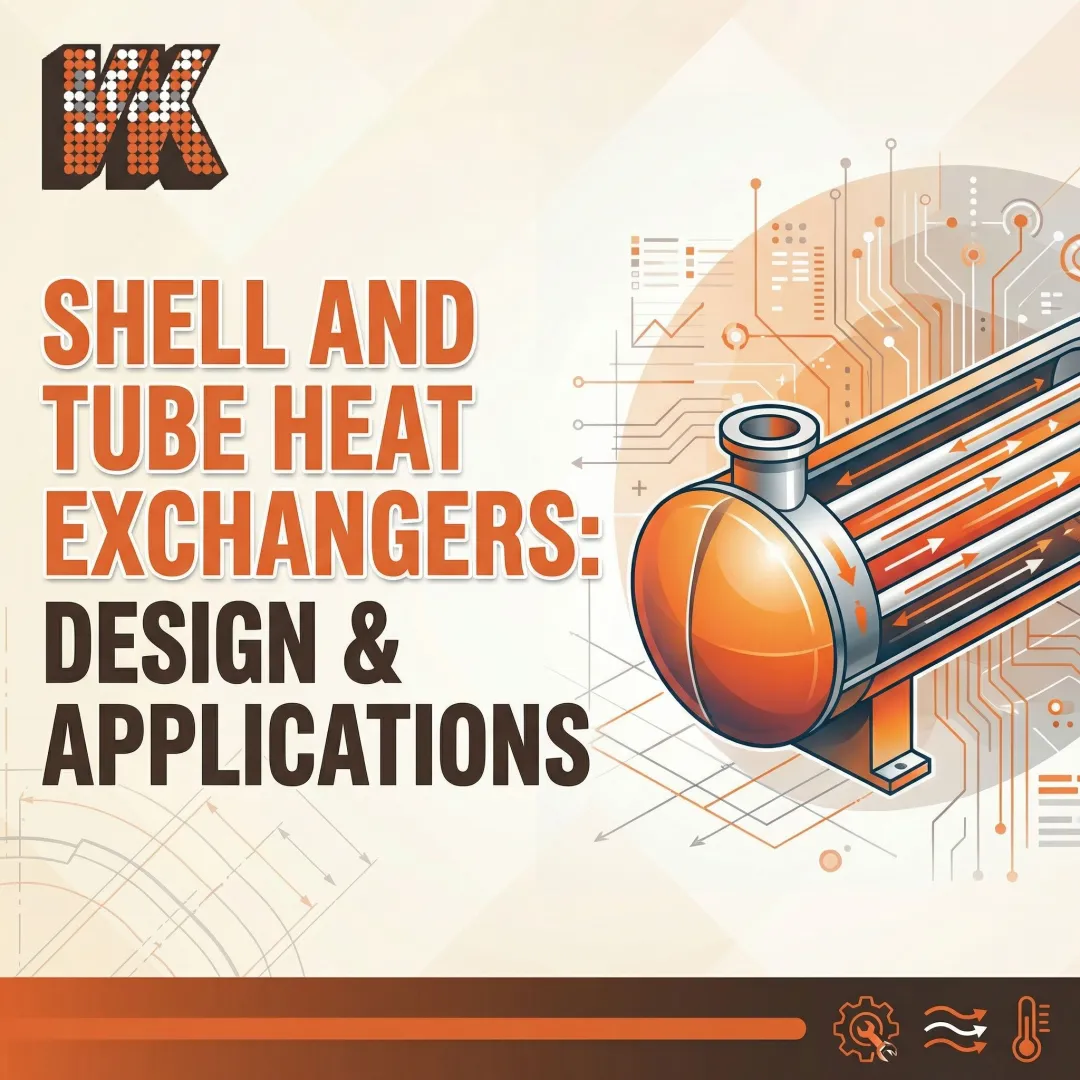
A shell and tube heat exchanger consists of a cylindrical shell containing a bundle of smaller tubes. One fluid flows through the tubes; the second flows over them inside the shell. Baffles direct shell-side flow to maximize contact and heat transfer.
Key sub-components include tube sheets (which secure tubes in place), baffles (which control flow patterns), and front/rear end headers (which distribute and collect fluid streams).
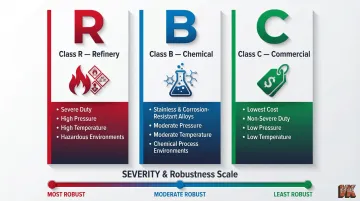
Designs follow TEMA (Tubular Exchanger Manufacturers Association) standards, which establish guidelines for design, fabrication, and performance across three classes:
- Class R (Refinery): Most robust design for severe-duty, high-pressure, high-temperature, hazardous environments
- Class B (Chemical): Stricter than Class C, utilizing stainless steel or corrosion-resistant alloys for moderate pressure/temperature and corrosive fluids
- Class C (Commercial): Lowest cost option for non-severe service with relatively low pressures and temperatures
Shell and tube exchangers are the most mechanically robust and pressure-tolerant design, handling a wide range of fluid types—including corrosive, two-phase, and high-viscosity fluids. Unlike plate and finned-tube designs, they can be broken down for cleaning and repair. Tubes can be individually replaced, and the shell side can be accessed for inspection.
Shell and tube exchangers are the standard choice for:
- High-pressure, high-temperature applications in oil refining and petrochemical processing
- Steam generation and vapor recovery systems
- Large fluid volumes and toxic gases requiring containment
- Corrosive process streams requiring specialized alloys
In harsh-service applications, tubes and shell-side components corrode and erode faster under severe conditions. Diffusion coating treatments—boronizing or aluminizing—address this directly by forming an intermetallic compound at the tube surface that resists high-temperature oxidation and sulfidation. VaporKote's aluminizing process uses this mechanism to extend component service life and reduce unplanned maintenance intervals.
Limitations to consider:
- Lower surface area-to-volume ratio than plate designs — bulkier for equivalent heat transfer duty
- Shell-side cleaning is complex and labor-intensive
- Higher initial fabrication cost than double pipe designs
- Larger physical footprint than compact alternatives
Plate Heat Exchangers
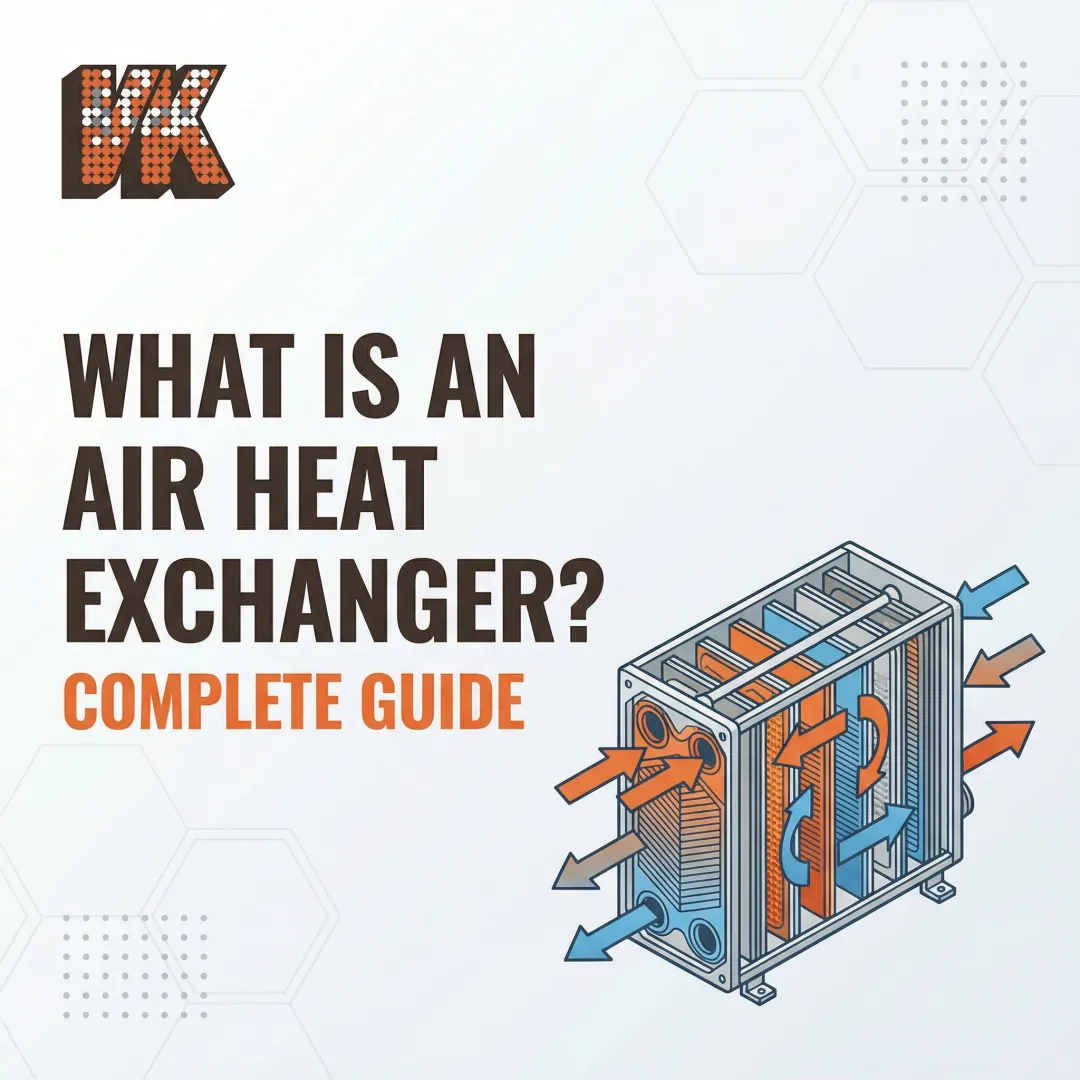
A plate heat exchanger consists of a stack of thin, corrugated metal plates clamped in a frame. Alternating channels direct hot and cold fluids past each other, separated only by the plate wall. Common variants include:
- Gasketed (disassemblable for cleaning, max ~35 bar/180°C)
- Brazed (sealed permanently, handles up to 140 bar but cannot be disassembled)
- Welded (combines high-pressure capability with limited serviceability)
The plate design creates a much higher surface area relative to its physical footprint than shell and tube designs can achieve in the same space. Studies show that corrugated chevron-patterned plates increase heat transfer coefficients by 27.45% compared to flat plates, and in specific two-phase modes, a 60° chevron angle can produce coefficients approximately 3.7 times higher than a 30° angle.
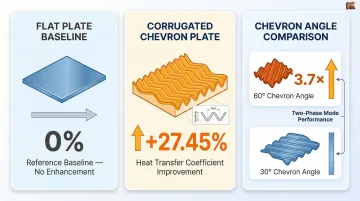
The corrugated plate pattern induces turbulence that improves heat transfer rates. That trade-off: the same turbulence demands significantly higher pumping power.
Plate heat exchangers are well-suited for:
- Food and beverage processing (pasteurization, dairy, brewing)
- HVAC systems requiring compact installations
- Pharmaceutical applications with strict hygiene requirements
- Chemical processing where space is limited and frequent cleaning is required
Gasketed designs can be disassembled plate-by-plate for inspection and mechanical cleaning, which matters most in food processing and pharmaceutical settings. They handle low-to-medium viscosity fluids efficiently.
Limitations to consider:
- Standard gasketed designs have lower maximum pressure and temperature ratings than shell and tube exchangers
- Fibrous particles or very high-viscosity fluids can foul or block closely spaced plates
- Brazed plate variants eliminate leakage risk but cannot be disassembled for cleaning
- Higher pressure drops increase pumping costs
Double Pipe Heat Exchangers
A double pipe (also called tube-in-tube) heat exchanger is the simplest design: one fluid flows through an inner tube, while a second flows in the annular space between the inner and outer tube. Multiple units connect in series or parallel to increase capacity. They are often arranged in a U-shaped "hairpin" configuration for compact installation.
This is the most cost-effective and mechanically straightforward option—easy to fabricate, clean, and repair. Double pipe exchangers are most practical for applications where total heat transfer surface area stays below 500 square feet; beyond that threshold, shell-and-tube or plate designs become more economical.
Best suited for:
- Small-to-medium flow rates
- Pilot-scale or niche process applications
- Applications requiring space flexibility
- Highly viscous or erosive fluids needing robust construction
Counterflow configuration in double pipe exchangers maximizes temperature differentials. The log mean temperature difference (LMTD) for counterflow always exceeds that for parallel flow, delivering solid thermal efficiency relative to its simplicity.
The design scales poorly for large-volume applications, though. Higher capacities require long pipe runs or many parallel units, making shell and tube or plate alternatives more practical.
Finned Tube (Air-Cooled) Heat Exchangers
A finned tube heat exchanger adds metallic fins to the outer surface of tubes, increasing the air-side surface area available for heat transfer. A fan (induced or forced draft) moves air across the finned tube bundle. One fluid passes through the tubes while ambient air serves as the cooling or heating medium.
This is the only major type that uses air rather than a liquid as the cooling medium, making it the preferred choice where cooling water is scarce, costly, or environmentally restricted. Air-cooled heat exchangers eliminate water consumption, a key advantage in arid regions and facilities under strict environmental regulations.
Widely used in:
- Oil and gas facilities and petrochemical refineries
- Power generation plants
- Diesel charge air coolers
- Waste heat recovery systems
- HVAC air-handling units
Fin geometry can be varied to match specific airside pressure drop and heat duty requirements. Typical specifications: fin heights from 5/16 to 1 inch, fin density from 7 to 11 fins per inch, aluminum fins as the standard material.
Air-cooled designs eliminate water treatment costs and contamination risk, reduce infrastructure requirements in remote locations, and require minimal maintenance due to fewer moving parts.
Performance does depend on ambient air temperature — output degrades significantly in hot climates. These units also require more physical footprint than water-cooled alternatives and are generally less thermally efficient than plate or shell and tube designs when cooling water is available. API Standard 661 outlines winterization strategies for cold climates, including variable-speed drives and recirculation ducts to prevent freezing.
How to Choose the Right Heat Exchanger for Your Application
Selecting the right heat exchanger means matching design characteristics to your specific operating conditions, maintenance environment, and lifecycle cost priorities—not defaulting to whatever is most advanced or most commonly specified.
Fluid Properties and Compatibility
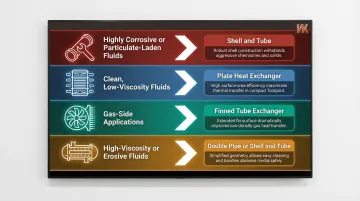
The nature of the fluids narrows the type immediately:
- Highly corrosive or particulate-laden fluids favor shell and tube designs, which allow tube-side placement of corrosive streams and use of expensive alloys only where needed
- Clean, low-viscosity fluids are well-suited for plate exchangers
- Gas-side applications point toward finned tube designs
- High-viscosity or erosive fluids may require double pipe or shell and tube construction
Operating Pressure and Temperature
Shell and tube exchangers handle the widest range of pressures and temperatures and are required for high-pressure duty. TEMA standards apply to exchangers with shell diameters up to 60 inches and design pressures up to 3,000 psi. Plate exchangers (especially gasketed) have more restricted operating envelopes and should not be specified for applications that approach or exceed their rated limits.
Space and Weight Constraints
When floor space or structural load capacity is limited, plate heat exchangers offer the most heat transfer per unit of volume. When space is not a constraint and high capacity is needed, shell and tube designs are preferred. Air-cooled finned tube units require horizontal open space and adequate air circulation clearance.
Maintenance Access and Cleaning Frequency
Gasketed plate exchangers allow full disassembly for inspection and mechanical cleaning—a significant advantage in food processing and pharmaceutical settings with strict hygiene requirements. Shell and tube designs allow tube-side cleaning by rodding (mechanical brush cleaning). Consider how accessible the chosen type will be over its full service life.
Lifecycle Cost and Surface Protection
The upfront equipment cost is only one part of total cost of ownership. Fouling in U.S. crude preheat trains alone costs the industry an estimated $1.0 to $1.2 billion annually due to lost energy, increased emissions, and maintenance downtime.
Components operating in aggressive process environments—particularly tubes and tube sheets—benefit from diffusion coatings such as boronizing or aluminizing, which achieve surface hardness up to 1500 Knoop (RC75+ equivalency), harder than tungsten carbide cutting tools. These treatments extend service intervals and reduce unplanned downtime, delivering lifecycle savings that far offset the initial coating investment.
Common Mistakes to Avoid When Selecting a Heat Exchanger
Choosing Type by Familiarity Rather Than Fit
Defaulting to whichever type was used in the previous installation without reassessing whether operating conditions, fluid properties, or maintenance requirements have changed is a costly mistake. A shell and tube exchanger may be over-specified for a low-pressure, clean-fluid application where a plate design would be smaller, cheaper, and easier to maintain.
Ignoring Fouling and Corrosion Potential at the Design Stage
Many heat exchanger failures trace back to underestimating fouling rates or fluid corrosivity during selection. Fouling increases thermal resistance over time and accelerates if the selected material or surface finish is not compatible with the process fluid. API 571 documents severe failure modes, including chloride stress corrosion cracking in 300 Series stainless steel above 60°C, even in freshwater systems where chloride salts concentrate.
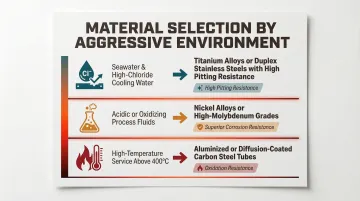
Specify tube material and surface treatment from the outset, not as an afterthought. For aggressive environments, material selection is non-negotiable:
- Seawater and high-chloride cooling water: titanium alloys or duplex stainless steels with high pitting resistance
- Acidic or oxidizing process fluids: nickel alloys or high-molybdenum grades
- High-temperature service above 400°C: aluminized or diffusion-coated carbon steel tubes
Overlooking Long-Term Operational Costs
A lower-cost exchanger with higher maintenance frequency, more frequent cleaning cycles, or earlier component replacement can cost two to three times more over its operating life than a better-specified unit. Research the total cost of ownership including expected downtime, cleaning labor, and replacement parts—not only the purchase price.
Selecting the Most Complex Design When a Simpler One Would Perform Equally Well
Over-engineering the heat exchanger type (for example, specifying a brazed plate unit where a gasketed plate would suffice) increases cost and reduces field serviceability without delivering meaningful performance gains. Match complexity to the actual demands of the application.
Conclusion
Heat exchangers are not interchangeable equipment. Each type—shell and tube, plate, double pipe, finned tube—is engineered for a specific combination of fluid characteristics, operating conditions, space constraints, and maintenance environments. Matching these factors to the right design is what determines long-term performance.
The selection decision extends beyond the exchanger type itself. Material compatibility, flow configuration, and surface protection of critical components all shape how long and how reliably the equipment operates. Investing in the right specification upfront avoids costly failures, unplanned downtime, and premature replacement . When harsh service conditions demand it, thermal diffusion coatings—such as boronizing and aluminizing—extend tube and component service life while cutting the frequency and cost of maintenance interventions.
Frequently Asked Questions
What is the most common type of heat exchanger?
Shell and tube heat exchangers are the most widely used type globally, valued for their versatility across a broad range of pressures, temperatures, and fluid types. Their established design standards (TEMA) and proven reliability in severe-duty applications make them the default choice in petroleum refining, petrochemical processing, and power generation.
What is the most efficient type of heat exchanger?
Plate heat exchangers generally achieve the highest thermal efficiency due to their large surface area-to-volume ratio and corrugated plate geometry. That said, a well-designed shell and tube exchanger in counterflow can be equally efficient for its intended duty — application and operating conditions ultimately determine the best choice.
What are the three types of heat exchangers?
The three most commonly referenced types are shell and tube, plate, and double pipe (tube-in-tube). Finned tube (air-cooled) exchangers are widely recognized as a fourth major category, especially in oil and gas and power generation.
Which heat exchanger is best for HVAC systems?
Plate heat exchangers are preferred in most HVAC applications for their compact size and high efficiency in liquid-to-liquid transfer. Finned tube designs handle air-side duties in air handling units, while large central chiller plants typically use shell and tube exchangers for water cooling and heat rejection.
What are the four types of heat transfer?
The four modes are conduction, convection, radiation, and advection (mass transfer of heat). Heat exchangers primarily rely on conduction through the dividing wall and convection within each fluid — radiation only becomes a factor at very high temperatures.
How many types of heat exchangers are used in HVAC systems?
HVAC systems commonly use two to three types: plate heat exchangers, finned tube (coil) exchangers, and shell and tube designs in large central plants. Distributed air-handling units often use fixed-plate cross-flow or rotary heat wheels for energy recovery.